
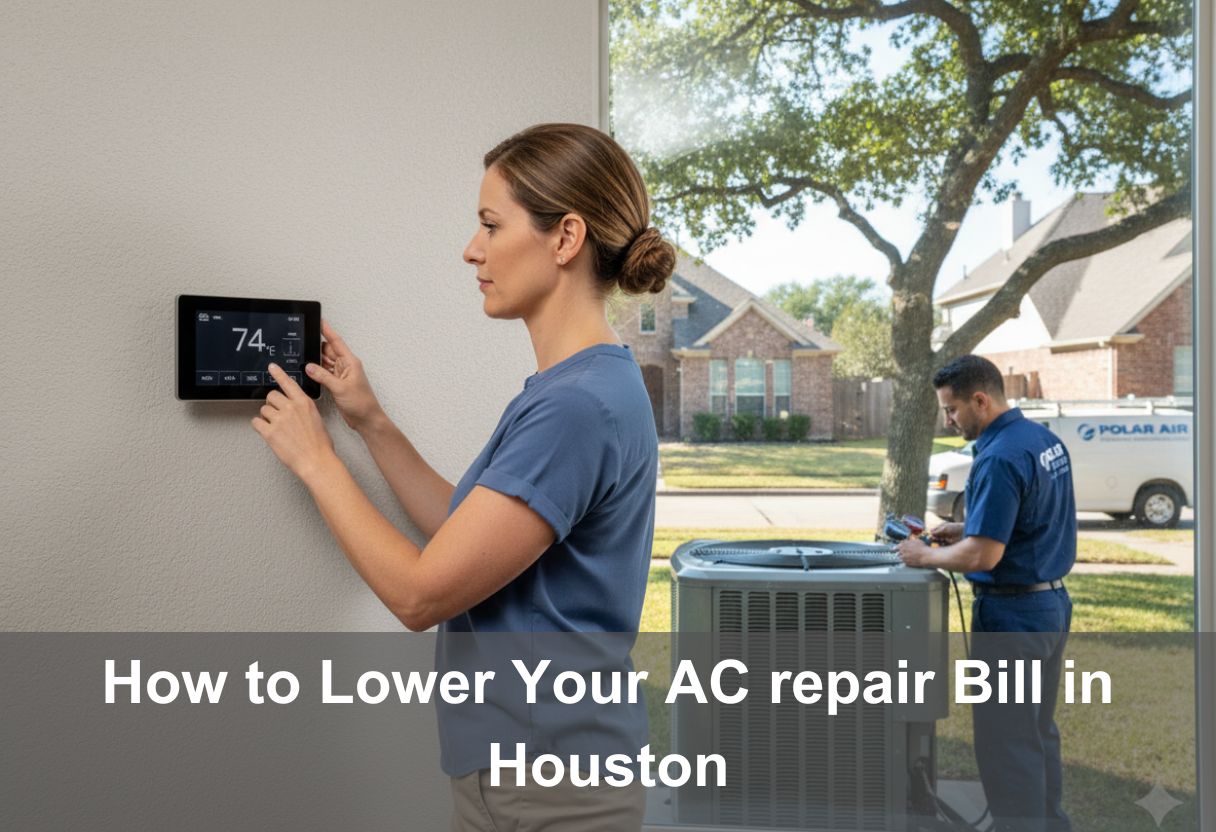
You can lower your AC repair bill in Houston by 40-60% through strategic preventive maintenance scheduling during March-April ($150-$300 annually), comparing multiple contractor quotes saving $200-$600 per repair, implementing monthly DIY maintenance tasks preventing $300-$600 in service calls, scheduling repairs during business hours avoiding 50-100% emergency premiums, and investing in energy-efficient upgrades that reduce operating costs by $400-$800 yearly.
According to Energy Star, Americans spend $14 billion annually on HVAC services and repairs, with Houston homeowners facing 15-25% higher costs due to the city’s extended 8-10 month cooling season and extreme subtropical climate.
Houston’s demanding environment creates unique financial pressures on homeowners. A study by Daikin Industries reveals that Houston leads the globe in AC usage, with systems running continuously during peak summer months. This intensive operation accelerates component wear exponentially compared to moderate climates, making strategic cost management essential for every Houston household.
With a combined HVAC industry experience of more than 10 years, we cater to homeowners and businesses with trusted air conditioning repair, installation, and maintenance services throughout the Houston metro area.
This guide reveals five evidence-based strategies that deliver measurable cost reductions backed by industry data and authoritative sources.
- Schedule preventive maintenance in March-April saving 15-30% vs emergency summer service
- Compare 3-4 written contractor quotes reducing repair costs by $200-$600 per service
- Implement monthly DIY maintenance preventing $300-$600 in annual professional service needs
- Schedule repairs during business hours saving $200-$400 vs emergency premium pricing
- Invest in efficiency upgrades delivering $400-$800 annual savings and extended system lifespan
Strategies to Lower Your AC Repair Bill in Houston
| Strategy | Implementation Cost | Annual Savings | Difficulty | ROI Timeline |
| Strategic Spring Maintenance | $150-$300 | $800-$1,500 | Easy | Immediate |
| Multi-Contractor Quotes | $0 (time) | $200-$600 per repair | Easy | Per repair |
| DIY Monthly Maintenance | $50-$100 | $300-$600 | Easy | 2-3 months |
| Off-Peak Repair Scheduling | $0 (flexibility) | $150-$400 per repair | Moderate | Per repair |
| Energy Efficiency Upgrades | $200-$800 | $400-$800 | Moderate | 6-12 months |
Schedule Preventive Maintenance During Houston’s Optimal Timing Windows
Why Schedule Preventive Maintenance During Houston’s Optimal Timing?
Scheduling AC maintenance in March or early April reduces costs by 15-30% compared to peak summer pricing while catching problems before they escalate into expensive failures with spring tune-ups costing $150-$250 versus emergency summer service starting at $300-$500 before repairs.
According to 75Degree AC’s Houston cost analysis, scheduling AC installations and major repairs during October through March offers potential savings of 10-20% as contractors appreciate off-season work and provide discounts to maintain steady business flow.
Houston HVAC contractors experience dramatically different demand levels throughout the year. During peak summer months (June-September), emergency calls overwhelm schedules creating 48-72 hour wait times and premium pricing.
Spring maintenance appointments occur during slower periods when contractors compete for business through promotional pricing and faster service availability.
Why March-April Timing Delivers Maximum Value
March and April represent the sweet spot between Houston’s mild winter and scorching summer.
According to industry data from Texas Central Air, annual HVAC maintenance costs $150-$300 per visit but prevents repairs averaging $1,200-$2,400 over system lifetime.
Your system hasn’t experienced maximum stress yet, giving technicians the opportunity to address wear before components fail completely. Contractors also offer aggressive spring specials during these months, with discounts of 15-30% compared to summer pricing.
Additionally, scheduling service before cooling season begins means repairs happen on your timeline rather than emergency schedules under financial pressure.
- March-April maintenance catches problems before summer failures occur
- Spring promotional pricing saves 15-30% vs emergency summer rates
- Better technician availability means flexible scheduling and thorough service
- Time to budget for needed repairs rather than emergency financial pressure
- System prepared to handle peak demand without mid-season breakdowns
Biannual Service for Houston’s Extended Season
While most moderate climates need only annual maintenance, Houston’s 8-10 month cooling season benefits from biannual service—spring preparation (March-April) and mid-season checkup (September-October).
According to Champion and Nash AC, scheduling bi-annual AC maintenance helps homeowners manage costs effectively.
This dual approach addresses wear that accumulates during extreme summer operation. Fall maintenance costs $150-$300 like spring service but focuses on different concerns.
Technicians clean coils accumulating summer dirt and pollen, check refrigerant levels after months of heavy use, and identify components stressed by continuous operation.
- Biannual service addresses Houston’s extended 8-10 month cooling season
- Spring prep (March-April) and fall checkup (September-October)
- Fall service costs $150-$300 checking wear from summer operation
- Extends system lifespan 2-4 years saving $2,000-$4,000 replacement costs
- Prevents early winter failures when contractors are understaffed
DIY Pre-Season Preparation Tasks
Before professional maintenance, complete simple DIY tasks maximizing service value.
According to Energy Star, roughly 20-30% of air circulating through HVAC systems can escape through poorly sealed connections, and simple homeowner maintenance prevents many issues.
Replace air filters, clear debris from outdoor unit perimeter (maintain 2-foot clearance), and clean visible coil surfaces. Check thermostat operation and inspect for unusual noises or performance issues.
These tasks take 30-60 minutes and cost $20-$50 in supplies, allowing technicians to focus on complex diagnostics rather than simple cleaning.
- Replace air filters monthly during cooling season ($3-$8 per filter)
- Clear 2-foot perimeter around outdoor condenser unit
- Clean visible coil surfaces with garden hose (outdoor unit)
- Check thermostat batteries and operation before service
- Document unusual noises or performance issues for technician review
Compare Multiple Licensed Contractor Quotes to Identify Fair Pricing
Why Compare Multiple Licensed Contractor Quotes to Identify Fair Pricing?
Comparing 3-4 written estimates from licensed contractors reduces repair costs by $200-$600 per service, as pricing for identical repairs varies 40-80% between Houston HVAC companies according to local market analysis.
According to Ace Comfort Air Conditioning data, Houston HVAC technicians typically charge $75-$150 per hour for labor during standard business hours, with most repairs requiring 1-3 hours of work, making comparison shopping essential for identifying fair market rates.
The key is comparing detailed written estimates—not vague verbal quotes. According to the Texas Department of Licensing and Regulation, unlicensed contractors account for 30% of HVAC complaints in Houston, making credential verification critical.
Request itemized breakdowns showing parts costs separately from labor charges, specific brand names for replacement components, and warranty terms on parts and labor.
How to Request Comparable Written Estimates
Contact 3-4 licensed HVAC contractors requesting written estimates for your specific repair needs. According to 75Degree AC industry experts, legitimate Houston AC repair companies maintain Texas Department of Licensing and Regulation (TDLR) HVAC licenses and EPA Section 608 certification for refrigerant handling.
Provide identical information to each—system age and brand, specific symptoms, and timeline for repair completion. Request estimates include parts brand names, labor hours and rates, warranty coverage, and total cost with no hidden fees.
Verify each contractor holds an active TACL (Texas Air Conditioning Contractors License) through the TDLR website before requesting estimates.
- Contact 3-4 licensed contractors for written estimates on needed repairs
- Verify active TACL license through TDLR website (www.tdlr.texas.gov)
- Provide identical information to each contractor for accurate comparison
- Request itemized breakdowns showing parts and labor separately
- Compare warranty terms—longer coverage often indicates quality confidence
Red Flags Indicating Overpriced Services
Certain pricing patterns suggest contractors charge excessive markups. According to Houston market analysis from multiple HVAC sources, parts priced at 100-200% over wholesale indicate unreasonable markup.
A $50 wholesale capacitor becoming $150-$200 retail is fair, but $300-$400 represents price gouging. Labor rates exceeding $150/hour for standard residential work also signal premium pricing unless justified by specialized expertise.
Vague estimates lacking itemization allow hidden markup that prevents meaningful comparison shopping between contractors.
- Parts marked up 100-200% over wholesale suggest excessive pricing
- Labor rates exceeding $150/hour for standard work indicate premium pricing
- Vague total-only quotes prevent meaningful comparison shopping
- Pressure tactics demanding immediate decision suggest dishonest practices
- Refusal to provide written estimates signals unprofessional operation
Leveraging Quotes for Price Negotiation
Use multiple written estimates for negotiation leverage with preferred contractors. If your preferred company quotes $650 but competitors offer $480 and $520 for identical work, present these alternatives requesting price matching.
Professional contractors often adjust quotes when faced with competitive pressure. According to industry best practices, this approach works best with established companies having flexibility in pricing structure.
Locally owned operations frequently match competitive quotes to secure business while maintaining quality service standards.
- Present competitive written estimates to preferred contractor
- Request price matching or justification for higher pricing
- Locally-owned companies more likely to negotiate than corporate franchises
- Balance lowest price with reputation, warranties, and service quality
- Use negotiation for repairs exceeding $500 where savings are substantial
Implement Monthly DIY Maintenance Reducing Professional Service Needs
How Implementing Monthly DIY Maintenance Reduces Professional Service Needs?
Houston homeowners performing simple monthly maintenance tasks reduce professional service needs by 30-40%, avoiding $300-$600 annually in preventable repairs through 15-30 minute routines costing $50-$100 yearly in supplies.
According to a study, homeowners who invest in annual maintenance avoid 70-80% of emergency repairs that would cost 1.5 to 2 times standard rates, with preventive care saving $1,200-$2,400 over system lifetime.
The most critical monthly task is air filter replacement. According to 75Degree AC maintenance guidance, homeowners should change filters monthly during peak cooling season (May through September in Houston) to prevent airflow restriction.
Clogged filters restrict airflow causing systems to work harder, increasing energy costs by $100-$300 annually while accelerating wear on blower motors and compressors.
Essential Monthly Maintenance Checklist
Create a monthly maintenance routine checking these critical items. According to Energy Star efficiency guidelines, simple homeowner tasks prevent many common AC problems when performed consistently.
Set phone reminders for the first weekend of each month during cooling season (May-October) ensuring consistent attention. These tasks require no special tools beyond basic household supplies and garden hose access.
Start with air filter inspection and replacement—remove filter from return air handler, hold to light checking for dirt accumulation, and replace if significantly darkened or if 30 days passed since last change.
- Replace 1-inch air filters monthly May-October ($3-$8 each)
- Clear outdoor condenser unit maintaining 2-foot clearance all sides
- Rinse outdoor coils with garden hose removing dirt and pollen
- Check condensate drain line for clogs (pour cup of vinegar monthly)
- Listen for unusual noises and monitor cooling performance changes
Outdoor Unit Care for Houston Climate
Houston’s humidity, vegetation growth, and frequent storms require attentive outdoor unit care. According to 75Degree AC, homeowners should keep outdoor units clear of debris and vegetation, maintaining 2-foot clearance to prevent efficiency loss.
Grass clippings, leaves, cottonwood, and debris accumulate rapidly in Gulf Coast climate, restricting critical airflow and reducing efficiency by 15-30%. Monthly outdoor coil cleaning with garden hose removes embedded dirt, pollen, and cottonwood before buildup hardens.
Spray coils from inside-out pushing debris outward rather than deeper into fins for optimal heat transfer efficiency.
- Trim vegetation maintaining 2-foot clearance around condenser units
- Remove accumulated grass clippings, leaves, and debris weekly during mowing
- Rinse outdoor coils monthly with garden hose (inside-out direction)
- Check for bent fins requiring professional straightening
- Inspect electrical disconnect and connections for corrosion or damage
Indoor System Inspection Points
Indoor inspection focuses on airflow, drainage, and unusual symptoms indicating developing problems. According to Texas Central Air, facilities should check and clean condensate drain lines quarterly to prevent water damage and system shutdowns.
Check supply vents throughout home ensuring strong consistent airflow from each register. Weak airflow from some vents suggests duct leaks or blockages requiring professional attention.
Inspect condensate drain line monthly ensuring proper drainage—pour a cup of distilled vinegar down drain line monthly preventing algae and mold buildup that creates clogs.
- Check all supply vents for strong consistent airflow
- Clear furniture, curtains, and obstructions from vents and returns
- Inspect condensate drain pan for standing water indicating clogs
- Pour cup of vinegar down drain line monthly preventing buildup
- Monitor indoor humidity levels—excessive humidity suggests system problems
Schedule Non-Emergency Repairs During Off-Peak Hours for Standard Rates
Why Schedule Non-Emergency Repairs During Off-Peak Hours?
Scheduling AC repairs during standard business hours (Monday-Friday 8AM-5PM) saves $200-$400 per service compared to emergency after-hours calls that cost 50-100% more due to premium labor rates and additional fees.
According to a research,, emergency service rates run 30-50% higher than standard repairs due to urgent response requirements and premium labor charges, with standard labor rates of $75-$150/hour increasing to $160-$250/hour for emergency calls.
Emergency rates exist for genuine crises requiring immediate response—complete system failure during 100°F heat waves with vulnerable family members present, refrigerant leaks creating safety hazards, or electrical problems risking fire.
However, many homeowners call emergency service for problems that could wait 12-24 hours without serious consequences, paying unnecessary premiums for urgency that isn’t actually required.
True Emergency vs Non-Emergency Situations
True AC emergencies in Houston require immediate professional response regardless of cost. According to 75Degree AC safety guidelines, complete system failure with indoor temperatures exceeding 85-90°F and vulnerable household members (infants, elderly, chronically ill, or pets) present warrants emergency service.
Refrigerant leaks with hissing sounds or chemical odors require immediate attention for safety. Electrical burning smells or sparking from AC equipment demand emergency response preventing fire hazards.
Non-emergency situations can wait for business hours saving substantial money—weak cooling maintaining 78-80°F indoor temperature isn’t urgent and can be scheduled at standard rates.
- True emergencies: Complete failure with 85°F+ indoor temps and vulnerable people
- True emergencies: Refrigerant leaks with hissing sounds or chemical odors
- True emergencies: Electrical burning smells or sparking from equipment
- Non-emergency: Weak cooling maintaining 75-80°F indoor temperatures
- Non-emergency: Unusual noises without immediate performance impact
Temporary Cooling Alternatives During Wait Periods
When facing non-emergency AC problems requiring business hours service, implement temporary measures maintaining tolerable comfort. Portable fans, window units in essential rooms, closing curtains blocking afternoon sun, and running ceiling fans help manage indoor temperatures.
Many Houston homeowners keep a backup window unit ($150-$300) specifically for emergency cooling situations. Installing a window unit in bedroom allows comfortable sleeping during overnight hours while scheduling standard-rate professional service the following business day.
This approach saves $200-$400 in emergency premiums while maintaining essential comfort during hot Houston nights.
- Portable fans and window units provide temporary cooling capacity
- Close curtains and blinds during hottest afternoon hours
- Use ceiling fans on high speed improving air circulation
- Focus cooling on essential rooms (bedrooms for sleeping)
- Backup window units ($150-$300) prevent emergency service costs
Scheduling Flexibility Maximizes Savings
Maximum savings come from flexible scheduling allowing contractors to fill gaps in their schedules. According to 75Degree AC pricing strategies, scheduling repairs during spring or fall offers better availability and potential promotional pricing.
Some companies offer “discount windows” for appointments scheduled within 2-3 day timeframes at 10-15% reduced rates. Others provide senior or military discounts, first-time customer promotions, or seasonal specials reducing standard pricing.
Building relationships with reliable affordable contractors through regular maintenance creates additional scheduling flexibility and priority access even during peak demand.
- Request “discount window” appointments at 10-15% reduced rates
- Ask about senior, military, or first-time customer discounts
- Schedule repairs during spring or fall for better availability
- Maintenance plan members get priority scheduling at standard rates
- Build contractor relationships through regular service earning preferred treatment
Upgrade to Energy-Efficient Components Reducing Long-Term Operating Costs
Why Upgrade to Energy-Efficient Components Reduces Long-Term Operating Costs?
Upgrading to energy-efficient AC components reduces monthly operating costs by 20-40%, saving Houston homeowners $400-$800 annually on electricity bills while reducing repair frequency through gentler operational characteristics.
According to Department of Energy data cited by 75Degree AC, upgrading from a 10 SEER to 16 SEER system saves Houston homeowners $300-$500 annually on energy bills, with these savings helping offset replacement costs over the 12-15 year system lifespan.
The key is strategic upgrade timing—when major components fail requiring replacement regardless, the incremental cost difference between basic and high-efficiency options often represents remarkable value. According to Champion and Nash AC installation data, upgrading to a high-efficiency model not only lowers monthly energy bills but also reduces the risk of future breakdowns.
Modern variable-speed systems, high-SEER equipment, and smart thermostats deliver measurable financial returns through reduced energy consumption over system lifetime.
High-Efficiency Equipment ROI Analysis
Modern high-efficiency AC systems deliver measurable financial returns through reduced energy consumption. According to Department of Energy efficiency standards, upgrading from 10 SEER to 16 SEER equipment reduces cooling costs by approximately 37%.
This translates to $500-$800 annual savings for typical Houston homes running AC 8-10 months yearly. The calculation becomes compelling over system lifespan—a 16 SEER system costing $2,000 more than 14 SEER baseline saves $600 annually.
Over a 12-year lifespan, total energy savings reach $7,200, minus the $2,000 premium equals $5,200 net lifetime savings beyond break-even point.
- Upgrading 10 SEER to 16 SEER saves 37% on cooling costs
- Typical Houston savings: $500-$800 annually from efficiency upgrade
- 12-year system lifespan: $6,000-$9,600 total energy savings
- Premium equipment cost: $1,500-$2,500 additional investment
- Net lifetime savings: $3,500-$7,100 after recovering premium
Variable-Speed Technology Advantages
Variable-speed compressors and air handlers represent the most significant efficiency advancement in modern HVAC technology. According to industry analysis, unlike single-speed systems running at 100% or 0% (on/off cycling), variable-speed equipment operates at 40-100% capacity matching exact cooling needs.
This precise operation reduces energy consumption by 20-30% while dramatically improving humidity control—critical in Houston’s muggy climate. Variable-speed systems also extend component lifespan through gentler operation, reducing repair frequency.
Frequent hard starts stress compressors and electrical components—variable-speed technology eliminates these stress events.
- Variable-speed operation matches exact cooling needs reducing waste
- Energy savings of 20-30% vs single-speed systems ($300-$500 annually)
- Superior humidity removal improving Houston comfort significantly
- Gentler operation reduces repair frequency by 30-40%
- Extended lifespan of 2-4 years adds $2,000-$4,000 value
Smart Thermostat Integration Benefits
Smart thermostats like Nest, Ecobee, and Honeywell Home optimize system operation through learning algorithms, occupancy sensing, and weather-responsive adjustments.
According to EPA studies on energy efficiency, these devices save 10-23% on cooling costs.
Smart thermostats cost $200-$350 installed but save Houston homeowners $150-$350 annually through intelligent scheduling and efficiency optimization. Beyond energy savings, smart thermostats provide maintenance reminders, filter change alerts, and diagnostic information identifying problems early.
Remote smartphone access allows temperature adjustments from anywhere, preventing unnecessary cooling of empty homes during work hours.
- Smart thermostats save 10-23% on cooling costs ($150-$350 annually)
- Devices cost $200-$350 installed paying for themselves in 1-2 years
- Learning algorithms optimize schedules based on occupancy patterns
- Maintenance reminders and diagnostic alerts catch problems early
- Remote smartphone access allows adjustments from anywhere
Final Thoughts
Lowering your AC repair bill in Houston requires strategic action across multiple fronts, scheduling preventive maintenance during optimal March-April timing, comparing multiple contractor quotes for all significant repairs, and implementing consistent monthly DIY care.
Houston’s demanding climate makes AC reliability essential, but informed homeowners leveraging these techniques reduce annual cooling expenses by $800-$2,000 while improving system reliability and comfort. Ready to implement these cost-reduction strategies with professional support?
Explore our list of affordable AC repair near Houston to contact us and schedule affordable maintenance service, receive competitive repair quotes, and discuss energy efficiency upgrades that deliver measurable returns through lower monthly bills and reduced repair needs year after year.
Leave a Reply